
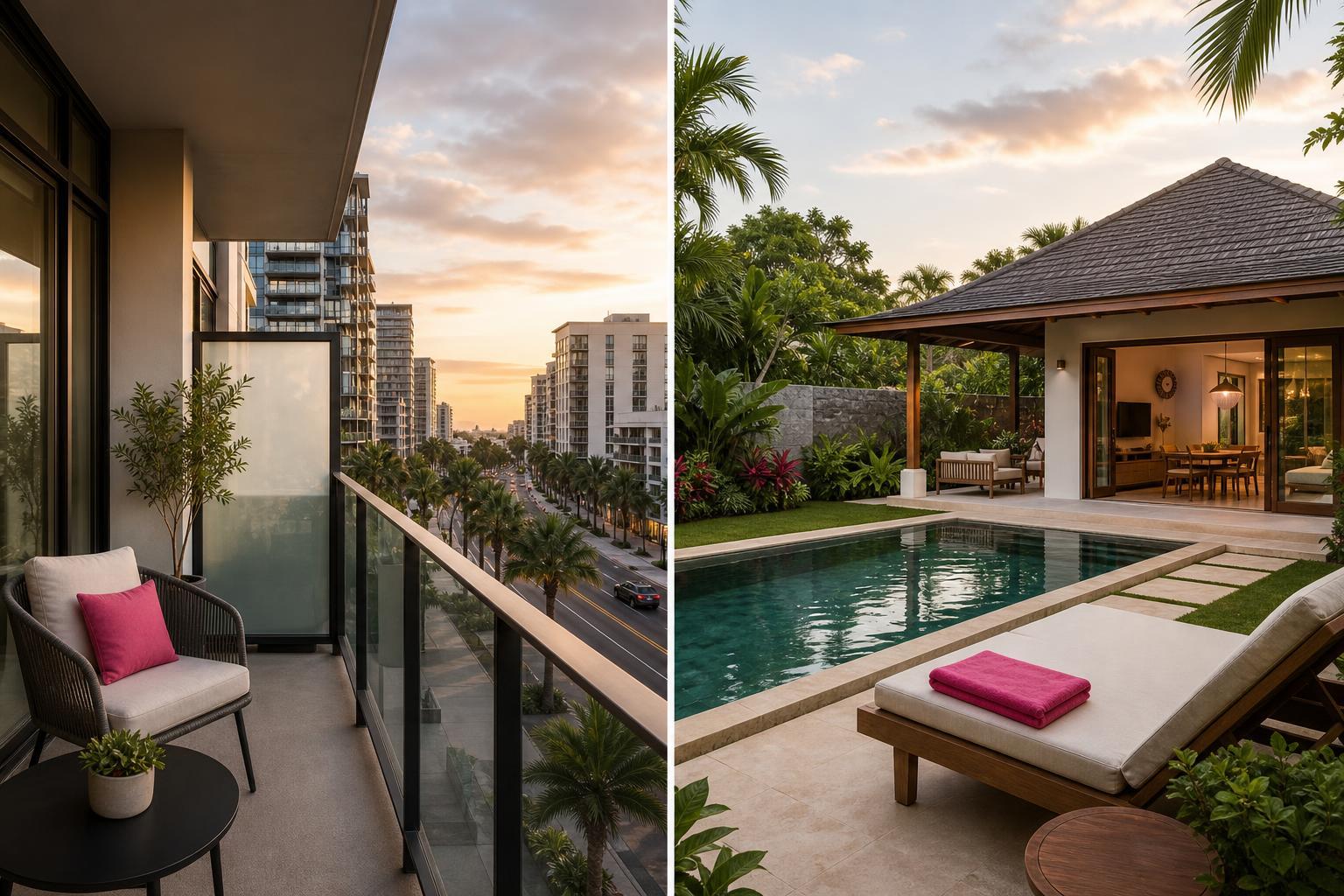
Same City, Two Very Different Ownership Paths
If you’re comparing a condo to a pool villa in Pattaya, you’re not just choosing a lifestyle. You’re choosing a completely different ownership structure. That difference matters more than the price tag.
A lot of buyers assume a villa purchase works like a condo purchase, just with more land. It doesn’t. Thai law treats land and buildings separately, and that separation shapes everything about how you can legally own a villa here.
Condos: Freehold Ownership, Capped by a Quota
Under the Condominium Act, foreign nationals can hold a condo unit’s title deed in their own name, with full freehold ownership. The catch is the foreign quota: under Section 19 of the Condominium Act B.E. 2522 (1979), foreigners can collectively own up to 49% of a condominium building’s total registered floor area. The remaining 51% must stay in Thai ownership.
This is the simplest, most direct ownership route available to a foreign buyer in Thailand. No company, no lease, no structure to manage. You need to bring the purchase funds into Thailand in foreign currency and get the paperwork right, but the ownership itself is straightforward. You can browse current options on our Pattaya condos page.
Pool Villas: You Can Own the House, Not the Land
Thailand’s Land Code prohibits foreign nationals from owning land directly. Section 86 limits land acquisition by aliens to cases covered by a treaty, and no such treaty is currently in force for ordinary buyers, so this is a hard restriction, not a gray area. Violations carry penalties under Sections 111-113: a fine of up to 20,000 baht, up to two years in prison, or both. This is the single biggest thing to understand before shopping for a pool villa or a house in Pattaya.
What you can own is the physical structure, the villa itself, in your own name. The land underneath it is a separate legal question, and it’s where most of the real decisions happen.
Leasehold: the standard route
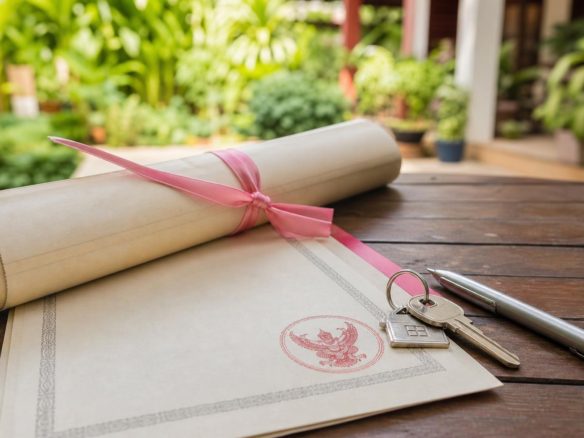
The most common structure is a registered leasehold. You lease the land for up to 30 years, the maximum term allowed under Section 540 of the Civil and Commercial Code, and that lease is registered against the title deed at the Land Department.
Be careful with renewal clauses. Some older contracts promise consecutive 30-year renewals, often marketed as “30+30+30.” In 2025, Thailand’s Supreme Court ruled that pre-agreed renewal terms of this kind are void: a lease beyond the initial 30 years requires a genuinely new agreement at the time of renewal, not a right locked in upfront. [to verify: confirm how this ruling applies to your specific contract with a licensed Thai lawyer, since case law interpretation can evolve.] If a villa listing advertises a “90-year lease,” ask exactly how that’s structured before you rely on it.
Thai company structures: legal, but only if done right
A Thai limited company can hold land, and a foreigner can be a shareholder and director of that company. This is a legal structure, but it only works if the Thai shareholders are genuine, meaning they actually invest and share in the company as required by law.
Bangkok Post has reported on an active enforcement campaign against structures that used Thai nationals as nominee, or “dummy,” shareholders with no real stake in the company, purely to get around the ownership rules. Legal-sector reporting on this 2025-2026 crackdown cites more than 46,000 suspected nominee companies identified and hundreds already prosecuted. [to verify: these headline figures come from secondary legal-sector reporting, not a single named government statement; confirm current status with a licensed lawyer.] Beyond the land-related penalties already mentioned, the Foreign Business Act adds separate penalties of up to three years imprisonment and a 1,000,000 baht fine for illegal nominee arrangements, and applies to the Thai nominee as well as the foreign buyer. That’s the version of this structure to avoid. A properly formed company, set up and reviewed by an independent lawyer who works for you and not the seller, is a different matter. Our guide on common mistakes to avoid when buying in Pattaya covers this in more detail.
Why This Distinction Matters More Than Price
A condo and a villa at the same price point are not equivalent purchases. A condo gives you a freehold asset in your own name from day one. A villa gives you ownership of a building, plus a separate legal arrangement for the land it sits on, one that needs its own review, its own contract, and its own lawyer.
That doesn’t make a villa a bad choice. It makes it a different one, with real trade-offs: more space, a private pool, a garden, and generally more privacy than a condo, against a more complex and longer-term legal relationship with the land itself.
Financing tends to reflect this gap too. Most Thai banks offer mortgages to foreign buyers only in limited cases, and mainly for condos, so most foreign purchases in Pattaya, condo or villa, end up funded in cash or through financing arranged in the buyer’s home country. Confirm current eligibility directly with a bank or mortgage broker, since it varies by lender and by buyer nationality. That reality doesn’t change the ownership question, but it’s worth factoring into your budget alongside the legal structure itself, since it affects how much cash you need on hand at each stage of the purchase.
Resale and Inheritance: Where the Two Paths Diverge Again
The ownership difference doesn’t stop at the purchase. It shapes how you exit the property too, whether that’s a future sale or passing it on to family.
Reselling a freehold condo is close to reselling any freehold property: transfer the title deed at the Land Office, confirm the buyer fits within the building’s foreign quota if they’re also a foreigner, and settle the transfer taxes and fees. It’s a well-worn process that Thai land offices handle constantly.
Reselling a leasehold villa is more layered. You’re not transferring land ownership, since you never held it. You’re assigning the remaining lease term to the buyer, transferring the building itself, and, if a company structure is involved, potentially transferring company shares as well. Each of those needs its own paperwork, and a shorter remaining lease term can affect what a buyer is willing to pay. This is worth asking about early, not at the point of sale.
Inheritance follows a similar split. A condo held in your own name generally passes to your heirs in a comparatively straightforward way, subject to standard succession rules. A leasehold interest or company shareholding involves more moving parts, and how it passes on depends on the specific structure and contract terms. Build this into your estate planning with a licensed Thai lawyer while you’re setting up the purchase, not after the fact.
What the Market Data Shows
Nationwide, the Real Estate Information Center (REIC) reported residential transfers down 9.3% year-on-year and transfer value down 12.4% for the first nine months of 2025, a broader slowdown that shapes the backdrop for both condo and villa demand. This is national data, not a Pattaya-specific figure.
For detached houses and villas specifically, figures reported across multiple property portals put the median Pattaya house price around 3.2 million baht, with detached houses averaging higher, and luxury 2-3 bedroom beachfront villas commonly priced in the 25-60 million baht range. Condo pricing runs lower at entry, with older projects around 65,000 baht per square meter and new-build projects closer to 180,000 baht per square meter.
Ongoing costs differ too. Condo buildings charge a common area maintenance fee, sometimes cited around 1 USD per square meter per month for a mid-range Pattaya project. [to verify: this is a single-building example found in listings, not an aggregated market figure; fees vary by building and amenities.] Villas carry their own recurring costs: land tax, private pool and garden upkeep, and security, none of which come bundled with a juristic management office the way a condo’s do.
A Practical Way to Decide
- If you want the simplest, most direct ownership path, with less ongoing maintenance: a freehold condo is usually the more straightforward choice.
- If space, privacy, and a private pool matter more than ownership simplicity: a villa can work well, provided the leasehold or company structure is set up properly.
- Whichever route you’re considering, use an independent lawyer, one who works for you, not one recommended by the seller or developer with no separate check.
- Ask for the exact ownership structure in writing before you pay a deposit, not after.
- For a company structure, ask how the Thai shareholders’ stake is documented, not just their names on paper.
Frequently Asked Questions
Can I ever own land directly in Thailand as a foreigner?
In practice, no, not through a standard purchase. Thai law restricts land ownership to Thai nationals and Thai-majority entities, with narrow exceptions that rarely apply to a typical residential buyer. Speak with a licensed Thai lawyer about your specific situation before assuming any exception applies to you.
Is a 30-year lease actually secure?
The lease itself, once registered at the Land Department, is a recognized legal right for its term. Renewal beyond 30 years requires a new agreement made at the time of renewal, not a pre-agreed right; Thailand’s Supreme Court struck down pre-agreed “30+30+30” renewal clauses in 2025. Review the renewal terms in your specific contract with a lawyer before you sign.
Is a Thai company structure risky?
It depends entirely on how it’s set up. A genuine company with real Thai shareholders is a legal structure. A company using nominee shareholders purely to bypass ownership rules is not, and has been the subject of enforcement action. Use an independent lawyer to review any company structure before you commit.
This article is general information, not legal advice. Ownership structures for land and villas in Thailand carry real legal consequences if set up incorrectly. Always confirm your specific situation with a licensed Thai lawyer before signing anything.
Weighing a condo against a pool villa for your situation? Talk to our team and we’ll walk you through what each ownership path actually looks like in practice.